
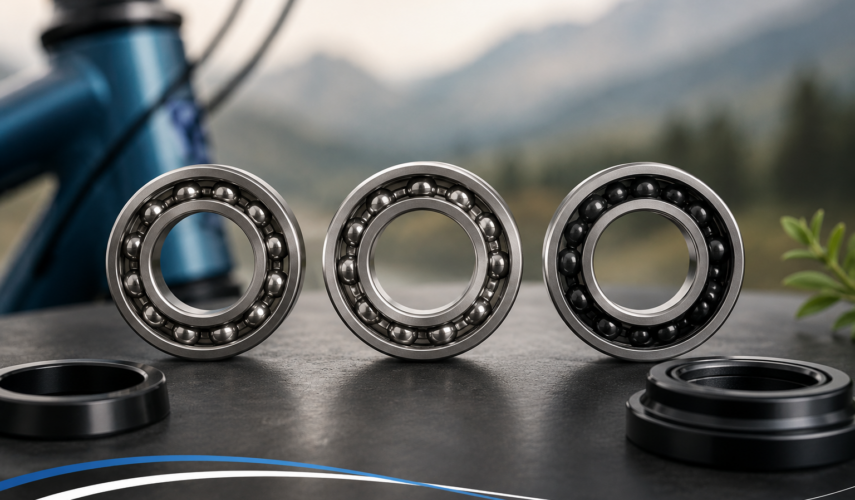

Scroll through any headset bearing listing and you’ll see the same three words repeated: steel, stainless, and ceramic. They all look similar, they all fit the same headset cup, and yet the price can vary by three or four times between them. So which one is actually worth your money? The honest answer depends less on your budget and more on how and where you ride. Here’s what actually separates them.
Why the Front End Wears Out Faster Than the Rest of the Bike
The headset sits right at the front of the bike, directly in the path of road spray, mud, and rain thrown up by the front wheel. Every steering input also loads this bearing differently to how a hub or bottom bracket is loaded, which is why the front end is often the first place on a bike to start feeling notchy or rough. Choosing the right headset bearing material from the start can add real years before you’re back here again.
Standard Steel: The Everyday Choice
Steel is the default material used in the vast majority of headsets, and for good reason — it’s strong, well understood, and affordable. A quality steel headset bearing with a good seal will comfortably see most riders through a few seasons of normal use, including wet-weather commuting and regular trail riding.
The trade-off is corrosion resistance. Standard bearing steel will eventually surface-rust if water consistently gets past the seal, particularly if the bike is stored somewhere damp or washed with a pressure washer aimed directly at the headtube. For riders who keep their bike indoors, ride mostly in dry conditions, or simply don’t mind replacing bearings every couple of years as routine maintenance, steel remains the sensible choice.
Stainless Steel: Built for Wet, Salty Conditions
Stainless steel uses a corrosion-resistant alloy in place of standard bearing steel. Rolling performance is essentially the same, but resistance to rust and pitting is significantly better, which matters a great deal for anyone riding through a British winter.
This is the bearing to reach for if you commute year-round, ride gravel or cyclocross where standing water and mud are unavoidable or simply want a bike that still looks and feels new after eighteen months of wet-weather riding. It costs a little more than standard steel, but for riders who put serious mileage on in poor conditions, the extra lifespan usually pays for the price difference on its own.
Hybrid Ceramic: Smoother, Harder Wearing, Pricier
Hybrid ceramic bearings pair ceramic balls with a steel inner and outer race. Ceramic balls are rounder, harder, and smoother than steel, which reduces friction at the point of contact and lets the steering rotate with noticeably less resistance. Because the balls also resist wear better, pitting and surface damage take much longer to develop.
The performance gain at the front end is small in absolute terms — steering resistance was never a huge drag source to begin with — but many road and gravel riders choose hybrid ceramic anyway for the smoother, more precise feel it gives, along with genuinely improved longevity over standard steel. It’s the priciest of the three options, so it tends to appeal most to riders who already run ceramic bottom bracket or hub bearings and want the whole bike to match.
So Which One Should You Buy?
- Ride mostly dry, don’t want to overspend, happy to replace every couple of years: standard steel is genuinely fine and does the job well.
- Commute through winter, ride gravel, or store your bike somewhere damp: stainless steel earns its extra cost through much better corrosion resistance.
- Want the smoothest possible steering feel and the longest-lasting bearing, budget isn’t the main concern: hybrid ceramic is the upgrade to go for.
Whichever material suits your riding, getting the size right matters just as much as the material itself. Dimensions vary considerably between brands and even between model years of the same bike, so it’s worth checking the exact bore, outer diameter, and width before ordering — or matching it against your bike’s make and model rather than guessing.
Shop Steel, Stainless & Hybrid Ceramic Options
We stock steel, stainless steel, and hybrid ceramic headset bearings across the full range of sizes used by major bike brands, along with SLT bearings for riders who want a solid-lubrication option built for extreme conditions. Browse our full headset bearings range or shop by brand with our headset bearing kits, matched exactly to your bike’s make and model.
Not sure which size or material your bike takes? Get in touch with our team — we’re keen cyclists ourselves and are always happy to help you find the right bearing first time.